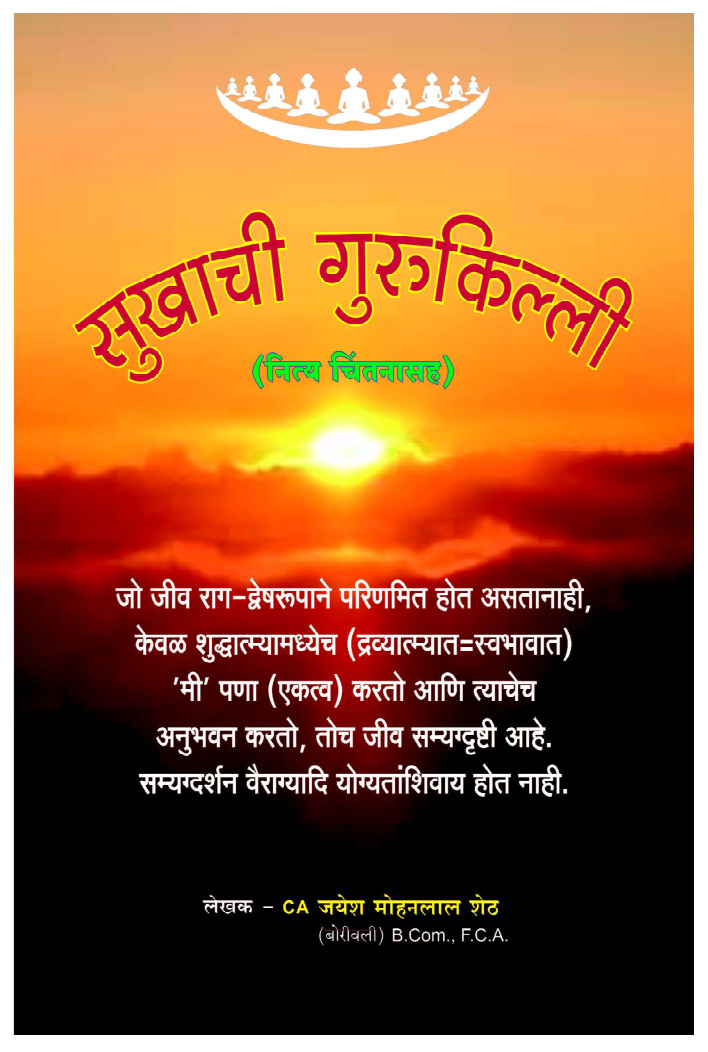
Teachings & Philosophy

The core principles of self-realization through Jain wisdom.

What CA. Jayesh Sheth Teaches

CA. Jayesh Sheth's teachings are rooted in the original Jain canonical texts — approached directly, without sectarian overlay. His core message is simple, universal, and profoundly liberating: by inculcating vairagya and the inner eligibilities needed for self-realization — not rushing outside for happiness, harbouring no worldly unnecessary wishes, practising the "Thank you! Welcome!" principle, and making no intense efforts for recognition — one becomes truly ready to pursue the supreme goal: the Experience of the Pure Soul.

All suffering arises from the mistaken identification of the self with the body, mind, and external circumstances. Right vision — experiencing the pure soul — is the beginning of the path to liberation and lasting happiness.

Six Pillars of the Teaching

1

The Pure Soul (Śuddhātmā)

The soul (ātmā) is inherently pure, conscious, and blissful from the absolute standpoint. In its true nature, it is like pure gold, although currently covered by karmas due to wrong identification with the body and mind. The direct experience of this purity is the foundation of Self-realisation.

2

Samyak Darśana (Enlightened Perception)

The Jain path begins with enlightened perception, the direct experience of the soul as distinct from the body and mind. Once this enlightened perception is established, enlightened knowledge (samyagjñāna) and enlightened conduct (samyakcāritra) naturally follow. It is the most essential step on the path.

3

Niścaya and Vyavahāra Naya

Jain philosophy operates through two complementary standpoints: the absolute viewpoint (niścaya naya) and the practical or conventional viewpoint (vyavahāra naya), which explains reality through conceptual distinctions. Understanding both, and not conflating one with the other, is essential for a correct grasp of the path and for avoiding misunderstanding.

4

Freedom from Sectarianism

"All that is good is mine; all that is right is mine." Truth is not the property of any sect. Jayeshbhai approaches the original Jain texts free from obstinacy and sectarian bias, allowing their essence to remain open and accessible to all sincere seekers.

5

The Nature of Happiness

Happiness is not something to be attained externally. It is the intrinsic nature of the soul. It remains unrecognised only because it is sought in external objects, relationships, and achievements. The key lies in turning inward and realising this inherent bliss through vairāgya and inner discipline, refraining from seeking happiness outside, living the "Thank you, Welcome" principle, and remaining free from the pursuit of fame, glory, and recognition.

6

Samayasāra & Jain Canonical Texts

The Samayasāra of Ācārya Kundakunda stands as the crown jewel of Jain philosophical literature. CA. Jayesh Sheth's teachings draw deeply from this and other Jain Āgamas, presenting their essential meaning with clarity, simplicity, and direct relevance for the modern seeker.

Words of CA. Jayesh Sheth

"The soul is always in bliss. Suffering exists only as long as we mistake ourselves for the body and mind. Recognise the soul, and you have found the key to happiness."

— CA. Jayesh Sheth

"All that is good is mine, all that is right is mine. I do not belong to any sect. The truth belongs to no one. It belongs to all."

— CA. Jayesh Sheth

"Enlightened perception is not a belief to be adopted; it is a direct recognition. When you see the soul as it truly is, separate from all else, the path of liberation opens naturally."

— CA. Jayesh Sheth

"You are not the body. You are not the mind. You are not your emotions or your thoughts. You are the pure, knowing, blissful soul — and that soul has never suffered."

— CA. Jayesh Sheth

Bhagavān Mahāvīra

The teachings of C.A. Jayesh Sheth are rooted in the wisdom of Bhagavān Mahāvīra (599–527 BCE), the 24th Tīrthaṅkara of Jainism, who attained kevala jñāna (omniscience) after twelve years of intense spiritual practice, marked by deep meditation on the pure Self, and Dharmadhyāna.

Mahāvīra's central teaching is the independence of the soul — that every soul is capable of attaining liberation through samyagdarśana, samyagjñāna, and samyakcāritra. This forms the foundation of all of Jayeshbhai's discourse.

"The greatest mistake of a soul is non-experience of its real self."
— Bhagwan Mahavir
Bhagavān Mahāvīra — The 24th Tīrthaṅkara

Ratnatraya — The Three Jewels

💎

Samyak Darshan

Right Faith

📖

Samyak Jnan

Right Knowledge

☀️

Samyak Charitra

Right Conduct

"These three together constitute the path to moksha (liberation)" — Tattvartha Sutra
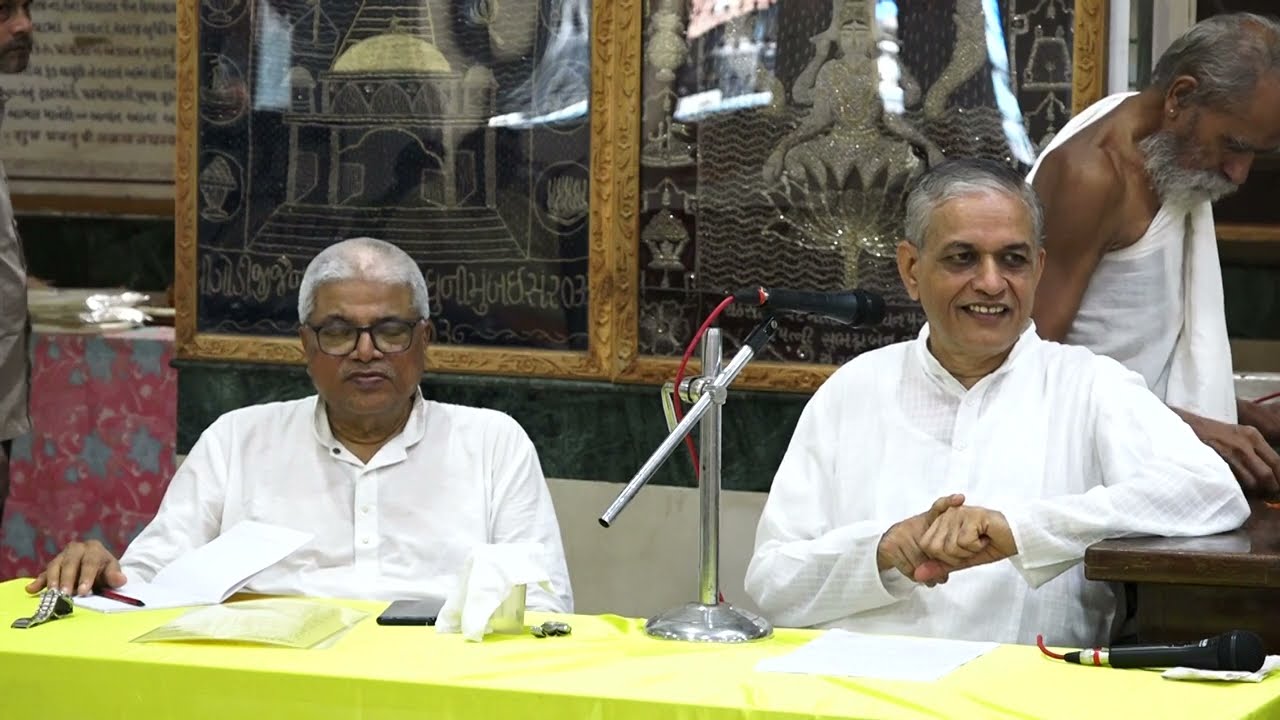
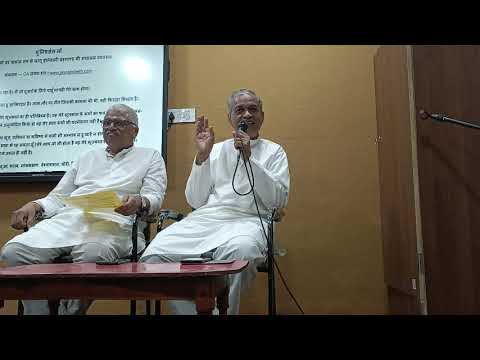
Watch CA. Jayesh Sheth's Teachings

Live shivirs and discourses — exploring Jain wisdom in depth. Click to watch on YouTube.

Dharmadhyāna Śivir — C.A. Jayesh Sheth
Gujarati · Śivir

Dharmadhyāna Śivir

An immersive Dharmadhyāna Śivir dedicated to exploring the nature of the soul, the awakening of Samyak Darśana, and the Jain path to liberation through the practice of Universal Law and Dharmadhyāna.

Watch on YouTube →
Universal Law — C.A. Jayesh Sheth
Hindi · Discourse

Universal Law

A discourse on the universal laws of existence, the principles that govern the soul through karma and the law of cause and effect, and illuminate the path to liberation.

Watch on YouTube →

Articles & Essays

Selected writings on Jain philosophy, meditation, and practical wisdom.

Commentary on Jain Scriptural Texts

Marathi

Detailed exposition of key passages from the Jain Āgamas and the works of Ācārya Kundakunda, presented with clarity and depth.

Download →

Explore CA. Jayesh Sheth's Teachings

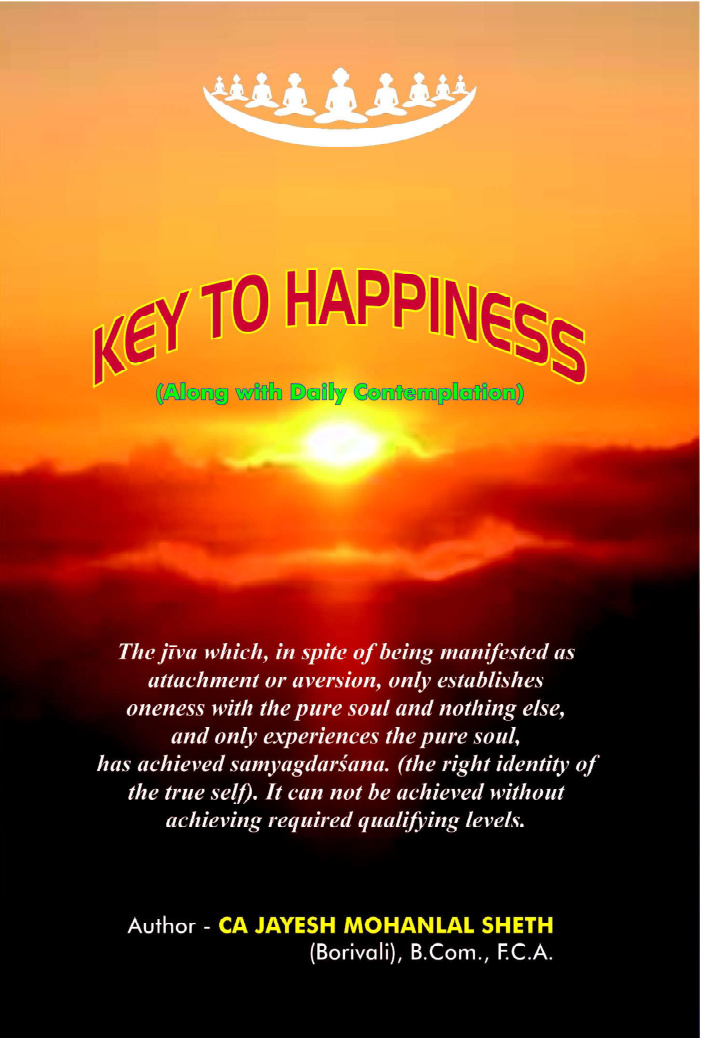
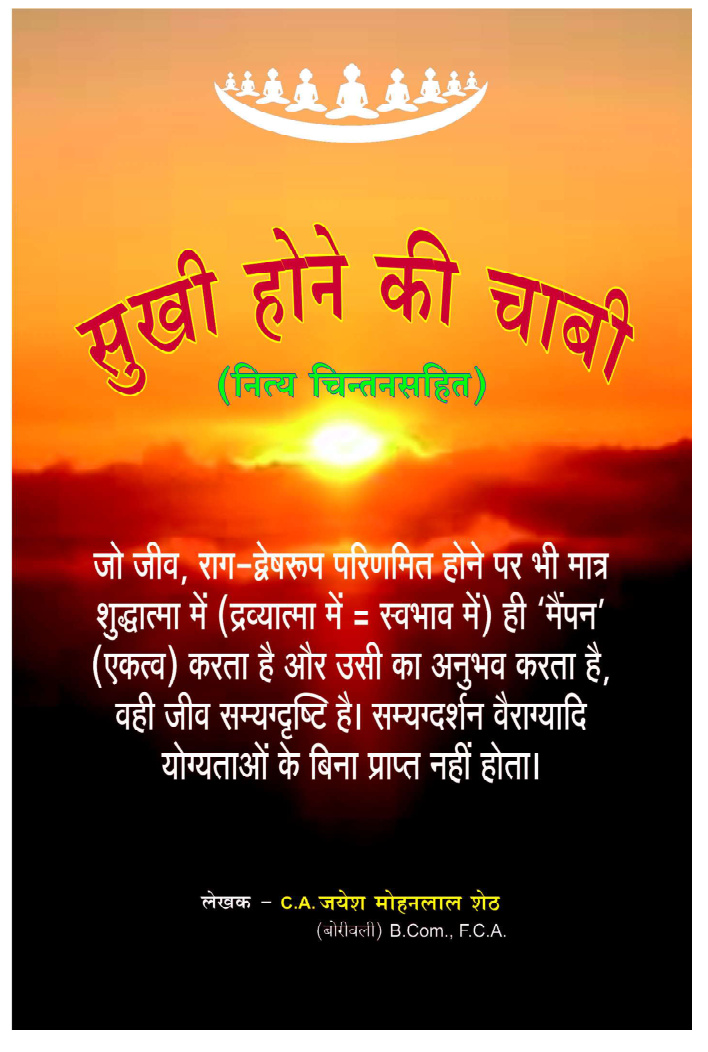
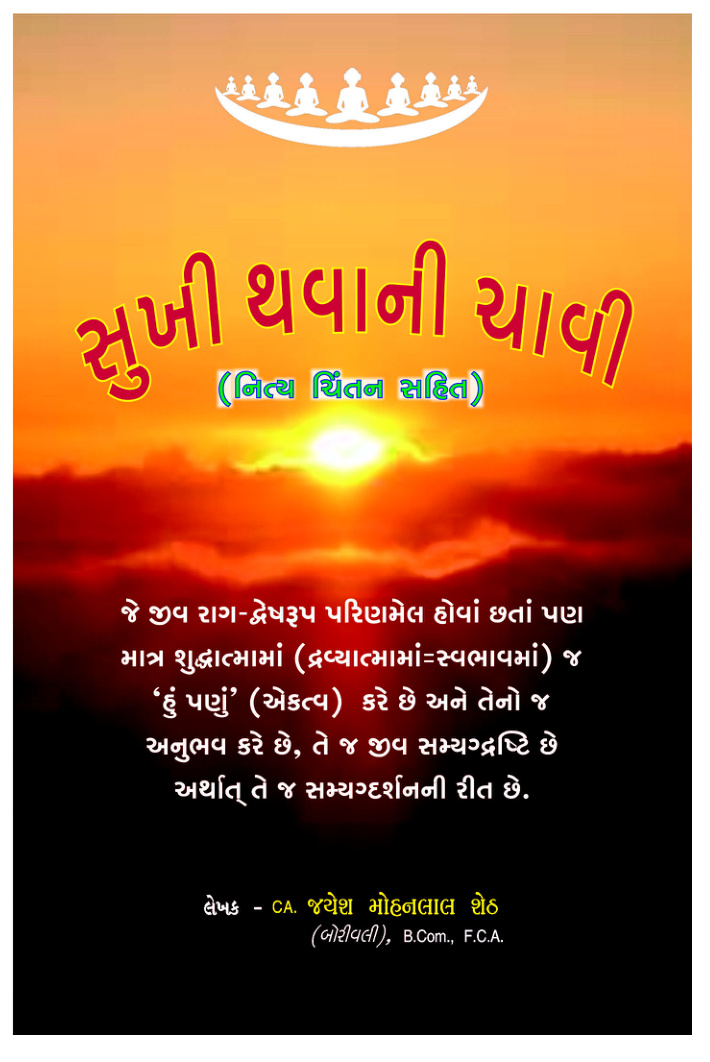
Read his books, watch discourses, or attend a shibir near you.